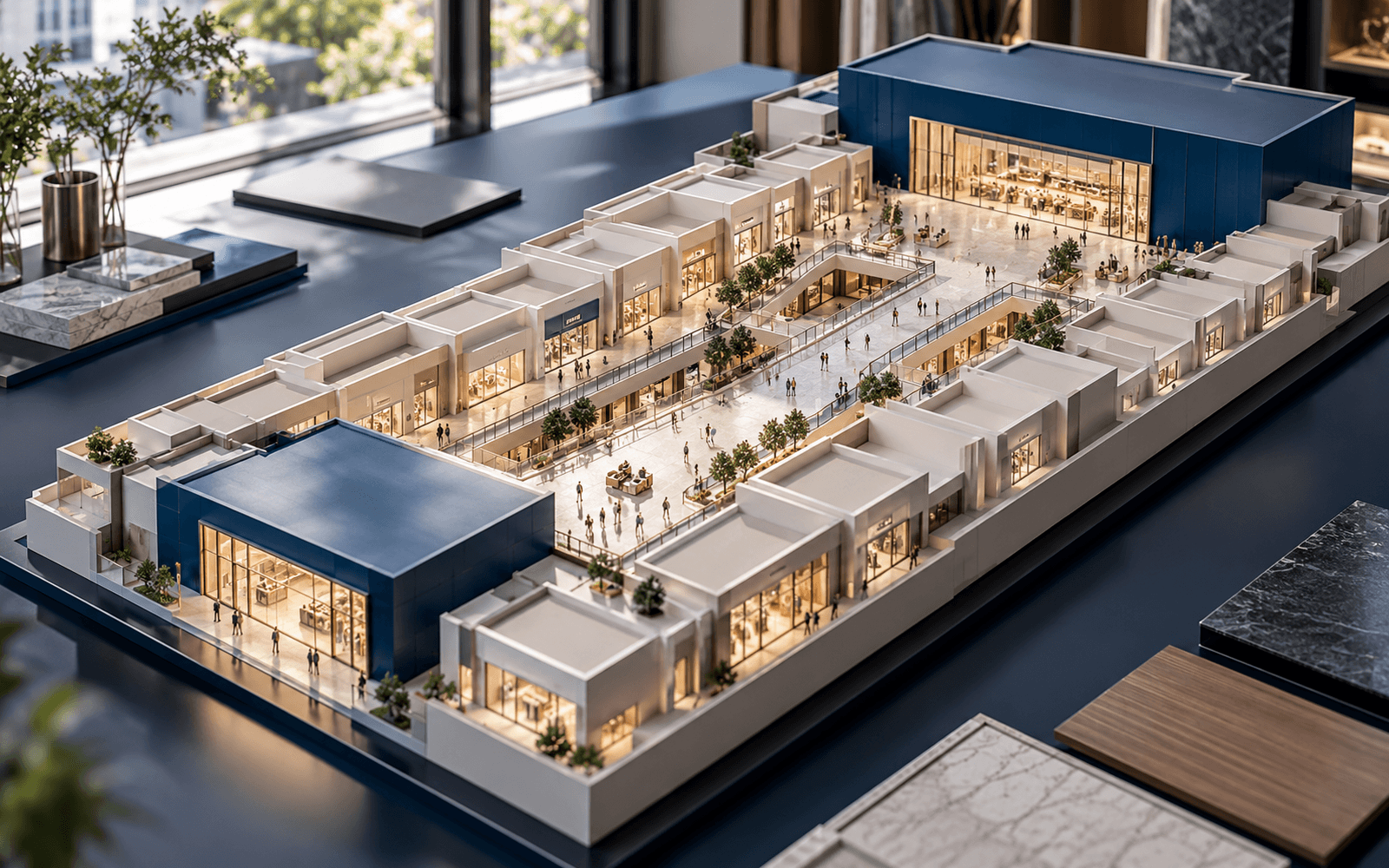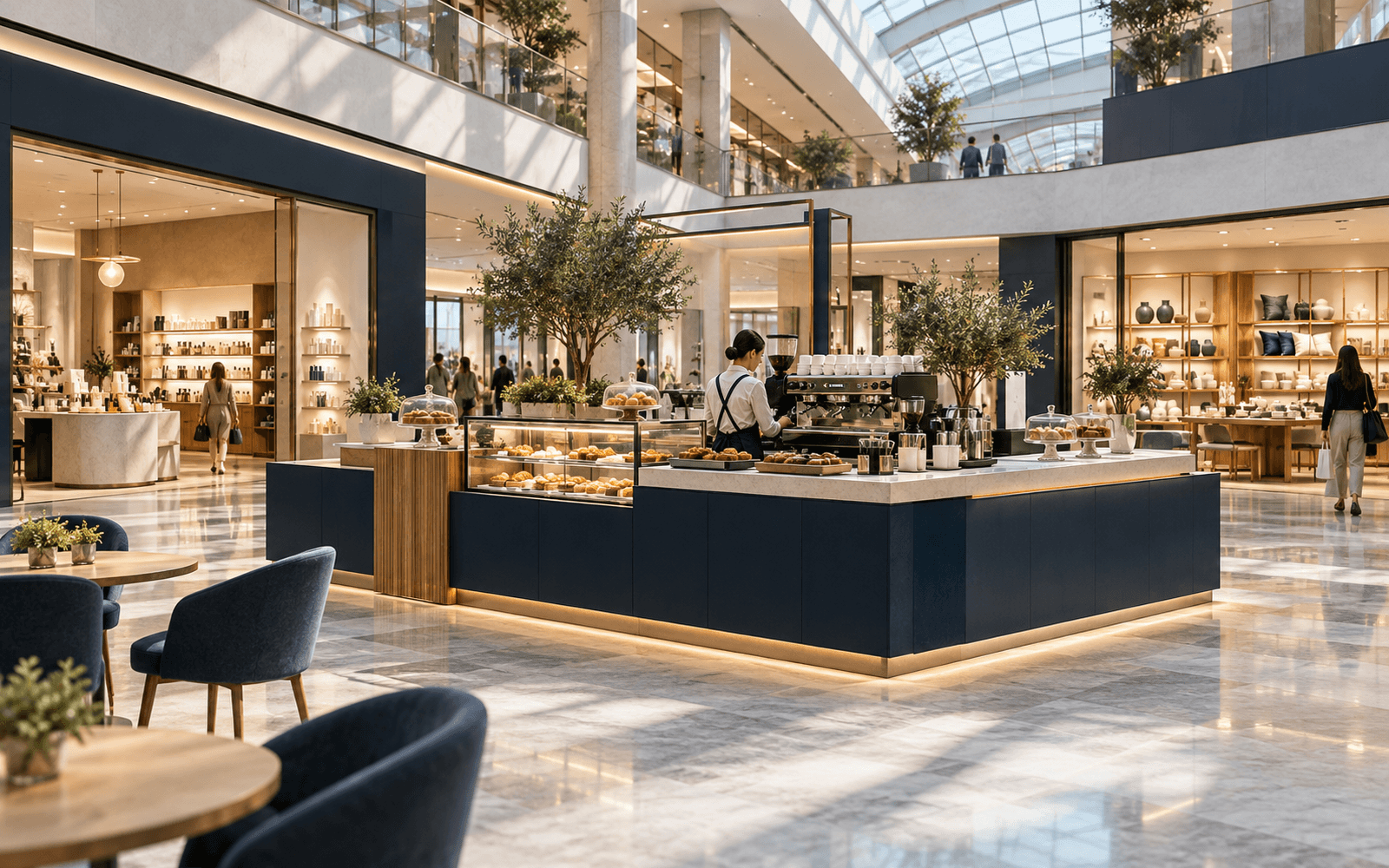
Deciding what business to open in a mall starts with a customer need and a workable operating model. Coffee, clothing, personal care and children's activities can serve very different purposes within the same shopping centre. A suitable category must fit the visitors, the available unit and your team's capabilities. Popularity alone does not establish that a business will be profitable in a particular location.
Identify the customer and the reason to buy
Describe who you want to serve, what they need and why they would choose you. An office worker buying lunch has different priorities from a family spending the afternoon at the mall. Define your price range and the reason for a repeat visit. A focused offer is easier to evaluate than a store intended to appeal to everyone.
Do not treat total mall footfall as projected store sales. Observe the proposed unit on weekdays and weekends, at different times. Record where people come from, where they pause and how they interact with comparable businesses. A missing category can indicate weak demand as well as an opportunity. Customer conversations, price comparisons and a small product trial can help test that distinction before you commit.
Ten business ideas to evaluate
These ideas are options to investigate, rather than a profitability ranking. Each meets a different customer need and brings a different operating constraint.
| Category | Potential customer need | Check before committing |
|---|---|---|
| 1. Coffee and drinks | A short break or a quick purchase | Water, drainage, power and peak-time service capacity |
| 2. Quick-service food | A convenient meal during work or shopping | Kitchen suitability, extraction and preparation time |
| 3. Bakery and desserts | A snack or something to take home | Production location, temperature control and daily waste |
| 4. Clothing and accessories | A particular style, size range or price point | Stock depth, fitting space and seasonal markdowns |
| 5. Cosmetics and personal care products | Product advice and regular replenishment | Reliable supply, storage and product presentation |
| 6. Phone accessories and repairs | A compatible product or a practical repair | Technical skills, secure handover and repair capacity |
| 7. Toys and educational products | An age-appropriate activity or gift | Product safety, age groups and stock turnover |
| 8. Gifts and home accessories | Occasion shopping and small household purchases | Differentiation, packaging and seasonal demand |
| 9. Alterations and personal services | A useful task completed during a mall visit | Staff skills, turnaround time and workspace |
| 10. Children's play and experiences | An activity during a family visit | Safety, supervision, acoustics and capacity planning |
Food concepts need to be assessed alongside their technical requirements. Serving drinks and cooking meals on site do not require identical facilities. In clothing, a broader range can tie up more cash in stock. For services and experiences, the number of customers you can serve depends on staff, equipment and time. Strong demand is of limited value if the operation cannot handle it.
Match the concept to the right format
The category describes what you offer; the format determines how and where you deliver it. The same product can require different stock, privacy and service arrangements in a kiosk and an enclosed shop. A smaller unit is useful only if it still supports the work.
| Format | When to consider it | Key constraint |
|---|---|---|
| Kiosk or island | A compact range and short transactions | Storage, security and utility connections |
| Enclosed retail unit | A wider range, fittings or consultation | Fit-out, stockroom and staffing needs |
| Food court unit | Meal service with shared customer seating | Kitchen capacity, queues and service flow |
| Service or experience space | Appointments, play or activities | Capacity, accessibility and safety |
A kiosk is not automatically inexpensive. Include equipment, custom fixtures, secure stock storage and staff coverage for the required opening hours. If you want to test a concept temporarily, ask whether short-term occupancy is available and what installation conditions apply.
Test profitability against sales and total costs
Compare two or three ideas using the same budget structure. Separate opening requirements, such as fit-out, equipment, initial stock and deposits, from recurring rent, service charges, staffing, utilities, replenishment and payment costs. Identify when cash must leave the business, including payments due before the first sale.
Build sales assumptions from transaction numbers and average basket value. Consider what remains after discounts, returns, product costs and waste, then assess whether it covers fixed operating costs. Test slower sales and a delayed opening to understand how long your available cash would last. Confirm tax and financing assumptions with your adviser. A category guide cannot determine the viability of an individual business without its actual figures.
Check the unit, its neighbours and its infrastructure
Evaluate frontage, visibility, access, deliveries and neighbouring businesses together. A coffee counter needs room for its queue; a clothing shop needs a suitable fitting arrangement; a play area needs controlled access. Confirm power, water, drainage, ventilation, storage and signage requirements with the technical team in writing. Not every concept can operate in every unit.
MG Global Partner's leasing process page explains the centre-side approach to evaluating categories and space. A chosen concept still needs to match the project and an available unit. Separately, verify the local permissions and operating conditions that apply to your activity before opening.
Prepare a clear business brief for your enquiry
Include the business or brand name, target customer, sample products and prices, space requirements, technical needs, operating experience and proposed opening schedule. Images and an indicative layout can make the concept easier to assess. Label forecasts as forecasts rather than presenting them as proven sales or an established customer base.
If the project you are interested in appears among the form's options, you can apply for retail space. If it is not listed, or you have yet to choose a specific mall, share your target city and concept through MG Global Partner's contact channels. An enquiry does not guarantee an available unit, approval or a profitable business.
 ChatGPT
 Claude
 Perplexity
 Grok