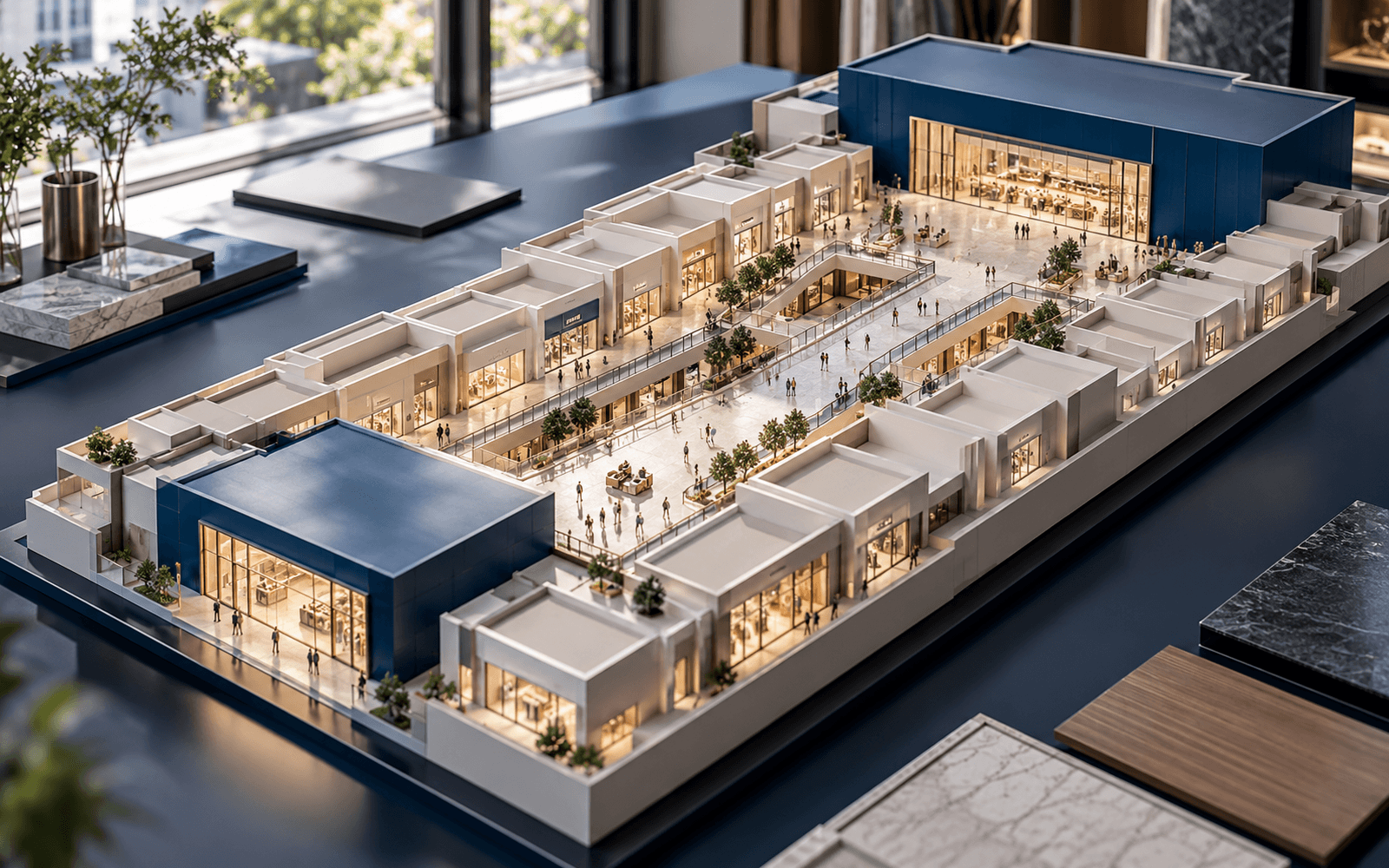
An anchor tenant gives customers a reason to visit a shopping mall. The tenant mix determines what else they can do when they arrive. Planning the two together helps a development team connect its customer proposition, floor layout and leasing decisions before commitments become difficult to change.
What makes a tenant an anchor?
An anchor is an occupier with a meaningful role in drawing visitors to the centre. A grocery operator, a large fashion store or an entertainment business may serve that purpose. A recognised name and a large footprint are useful starting points for assessment, but neither proves that an operator will attract the right customers at a particular location.
A smaller specialist operator can also create a strong reason to visit. Rather than assign rigid size thresholds to anchors and mini-anchors, describe the role each candidate is expected to perform. Is it serving frequent household needs, attracting a particular interest group, or extending the visit into the evening? Record the evidence behind that expectation.
Build the shopping mall tenant mix around customer needs
Start with the catchment and competing destinations
Define who can realistically reach the property, how they travel and why they would choose it. A weekday office population and a residential catchment can have different visit patterns. Test those differences through interviews, observation and current local information rather than assuming an entire city behaves the same way.
Retail market analysis for shopping malls should compare existing destinations, price positions, missing services and realistic alternatives for the customer. A nearby centre with similar stores may still serve a different travel route or spending occasion. Copying its brand directory will not explain its performance.
Separate category share from anchor status
Use one schedule to classify units by activity, such as retail, food and beverage, services or leisure. Use a separate field to identify anchors. Otherwise, an anchor supermarket can be counted twice: once as grocery space and again as an anchor category.
Also distinguish unit count, lettable area and rental income. In an illustrative scheme with 20,000 sq m of lettable space, 4,000 sq m allocated to dining represents a 20% area share. It does not imply that dining supplies 20% of the shops or rental income. This is an arithmetic example, not a recommended allocation.
| Candidate role | Customer question | Delivery question |
|---|---|---|
| Frequent-needs anchor | What brings people back regularly? | Can deliveries, storage and opening hours work? |
| Fashion or specialist retail | Does the offer fit the intended customer? | Is the proposed unit commercially and physically suitable? |
| Dining | Which meal occasions are underserved? | Are extraction, waste and seating requirements feasible? |
| Leisure or services | What additional reason to visit is provided? | Can access, noise and operating hours be accommodated? |
Evaluate the operator behind the brand
For each important role, retain more than one credible candidate. Compare local customer relevance, operating experience, fit-out needs, financial capacity to deliver the store and the proposed opening programme. For an international brand, establish which entity would actually sign the lease and operate the premises.
Keep expressions of interest, written offers, signed leases and trading stores in different status columns. An enthusiastic meeting is not an opening commitment. A signed anchor lease also does not settle every remaining leasing decision; smaller tenants still need an appropriate audience, unit and commercial proposition.
Place anchors within a workable visitor route
Trace a visitor’s route from each entrance and transport connection to the proposed anchor. Check whether adjoining shops are visible, whether moving between floors is clear, and whether a return route bypasses much of the centre. Review accessibility and service circulation alongside the commercial layout.
An independent entrance may be essential for an operator’s hours or format. Assess how its customers can also access the mall, rather than automatically treating that entrance as a flaw. Similarly, putting leisure upstairs is only a proposal until access, visibility, technical capacity and customer demand have been tested.
These trade-offs belong in shopping mall concept and architectural planning. Resolve major changes before unit boundaries and servicing arrangements are fixed. Retaining an alternative layout for a critical anchor space can also make later negotiations more manageable.
Make commercial commitments and fallback options explicit
Assess an anchor proposal using its total effect on the project, including landlord works, fit-out contributions, rent commencement and operating costs. Distinguish what is paid by the landlord from what the tenant supplies. Compare proposals on the same basis instead of looking only at headline rent.
Opening obligations, permitted use, exclusivity and any co-tenancy provisions need project-specific legal review. A benefit or remedy exists only if the applicable arrangements support it. Do not assume that an anchor’s departure automatically reduces every other tenant’s rent.
Prepare a fallback for delay or departure: replacement by a similar operator, subdivision, or a different use. Each option needs a demand assessment, technical scope, cost and realistic interruption period.
Review the mix after opening
Track leased space separately from space that is open and trading. Review footfall by zone and time, vacancy duration, customer feedback and sales information where lawfully available and agreed. Compare like periods and record major events or access changes before attributing an improvement to the tenant mix.
A useful decision pack brings together the category schedule, candidate shortlist, floor plan, technical requirements and commercial assumptions. MG Global Partner’s tenant mix strategy service can help define how these elements should fit the location and target audience of your project.
Source note
ICSC — Research & Selection of Tenants provides professional background on anchor roles and locally informed tenant selection.
 ChatGPT
 Claude
 Perplexity
 Grok