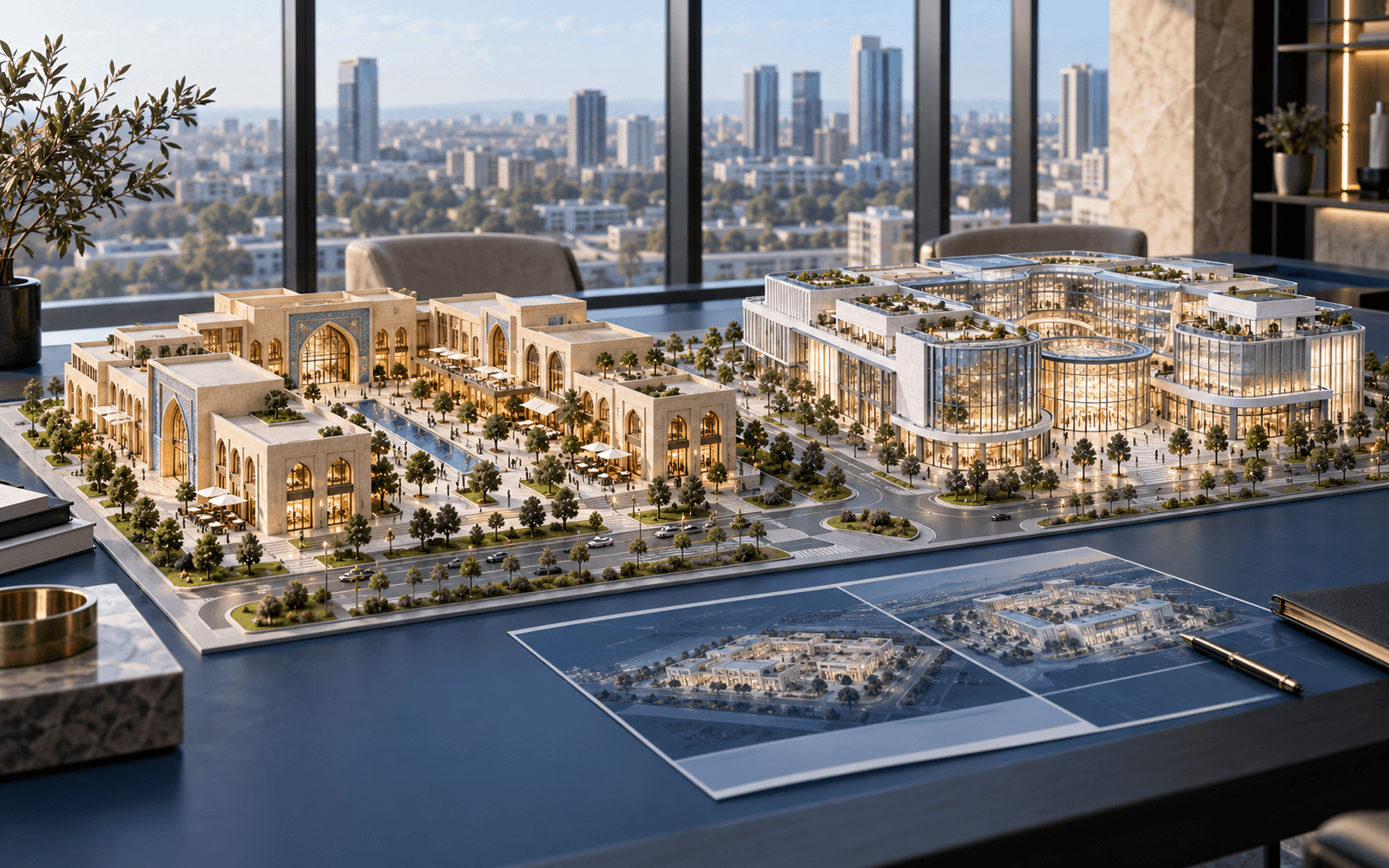
For investors researching Uzbekistan real estate and Kazakhstan real estate, a shopping mall requires a different assessment from an apartment development or a warehouse. The investment depends on the ability to attract suitable retailers, collect sustainable rents and operate a building that customers want to visit. A promising national growth story is a starting point for research, not evidence that a particular mall will perform.
Begin by defining the investment: acquiring an operating centre, developing a new one or taking a stake in a project company. Then compare cities and sites using the same assumptions. This guide explains the evidence to request before committing capital in Uzbekistan or Kazakhstan.
Compare investment options on a consistent basis
A proposed Tashkent development and an operating Almaty shopping mall have different risk profiles. The first needs funding before rental income begins. The second may have existing income but also expiring leases, maintenance liabilities or refurbishment requirements. Comparing their headline prices per square metre misses these differences.
| Investment route | Evidence to request | Decision question |
|---|---|---|
| New development | Site documents, infrastructure conditions, cost plan and tenant feedback. | Can the project reach opening with adequate funding and a workable concept? |
| Operating mall acquisition | Lease schedule, collections, operating accounts and technical survey. | How much income is sustainable after necessary expenditure? |
| Project company participation | Corporate records, liabilities, shareholder terms and governance rules. | What does the investor control, and who funds cost overruns? |
Use a common valuation date, reporting currency and definition of leasable area. Identify whether quoted costs include land, financing, taxes, tenant incentives and opening expenses. A cheap entry price can be offset by spending that the initial presentation leaves outside its budget.
Uzbekistan real estate: assessing a Tashkent shopping mall
Separate shopping centre evidence from residential and street retail data. Apartment sales, an advertised shop rent and a mall’s collected rental income answer different questions. Within Tashkent, map the proposed catchment and assess each competing centre’s offer, access, occupied units and actual operating status.
In its June 2026 commentary on Tashkent, CMWP highlights the importance of local operating knowledge and ownership structure. Treat this as a market participant’s assessment. For a project under review, the practical issue is whether ownership arrangements allow coordinated leasing, maintenance and management of the whole centre.
Distinguish supply announcements from operating competition
A planned project, a building under construction and an open mall should occupy different rows in the supply schedule. Record the information date and the evidence supporting an opening date. Do not count every announced scheme as completed supply or assume that a delayed project has disappeared.
For a conversion, commission a technical review before adopting a retail concept. Loading access, ceiling heights, circulation, utility capacity and the layout of existing units may limit what can be achieved. A purchase opportunity becomes investable only when the cost of making it usable is understood.
Kazakhstan real estate: examine Almaty and Astana separately
The AIFC’s August 2024 commercial real estate review examines Almaty and Astana within Kazakhstan’s market. It is useful historical context, not a current rental quotation. An investment decision needs updated evidence for the specific catchment, building and retailer segment.
In each city, review residential and employment catchments, public transport, vehicle access and the operating implications of seasonal conditions. Ask prospective retailers how the location fits their existing network. Interest in the city does not necessarily mean interest in your unit, floor or opening date.
A structured shopping mall market and competition analysis should connect these observations to a clear positioning decision. It should explain which customer needs remain underserved and what evidence supports the proposed tenant mix, rather than simply listing nearby centres.
Check the investment structure and local partner
Buying a property and buying shares in its owner are different transactions. For either route, request a clear description of the assets, rights and liabilities being transferred. Local legal and tax advisers should assess the chosen structure, permitted use, approvals, tax treatment and payment arrangements for that transaction.
Review a partner’s completed work, financial commitments and proposed project team. Define approval rights for borrowing, leasing, changes to the budget, related-party contracts and disposal. If a partner contributes land or services rather than cash, document the valuation, delivery obligations and consequences of non-performance.
Agree how information will be reported after investment. Investors need access to leases, collections, expenditure and material disputes. A management contract should specify responsibilities and reporting obligations; a well-known name on a presentation is not a substitute for enforceable terms.
Translate rental evidence into a cash-flow model
For every comparable rent, record the date, unit size, floor, condition, currency and treatment of taxes and service charges. Distinguish asking rents from signed terms and actual collections. Anchor stores, smaller shops, food operators and entertainment uses should not automatically share one rental assumption.
Build in the time required to lease and open units. An executed lease may include fit-out time or rent-free periods, so contractual occupancy and cash collection can develop at different speeds. Model recurring operating costs and capital expenditure separately, then assess funding and distributions at the appropriate level.
Use shopping mall investment feasibility to bring these inputs together. Test slower leasing, lower collected rents, delayed opening and higher costs, including combinations of adverse conditions. Where income and debt are in different currencies, examine the effect on debt service instead of assuming exchange rates stay favourable.
An exit value should have its own evidence and assumptions. A forecast capital gain cannot repair weak operating fundamentals. State what happens if a sale takes longer than expected, refinancing is unavailable or the investor needs to provide additional capital.
Prepare a decision pack with clear conditions
- A defined investment perimeter and a list of unresolved legal or ownership issues.
- A dated site and competitor assessment, with proposed projects identified separately.
- A tenant schedule distinguishing discussions, written offers and executed leases.
- A technical survey and an independently reviewed development or refurbishment budget.
- A funding plan and downside cases showing when additional cash may be needed.
- Governance, reporting and exit arrangements, including responsibility for unresolved tasks.
The recommendation should state whether to proceed, proceed subject to conditions, revise the concept or stop. Each condition needs an owner and a deadline. To discuss how these workstreams fit your project, explore MG Global Partner’s shopping mall consultancy.
Sources
- CMWP commentary on Tashkent real estate, 19 June 2026.
- AIFC commercial real estate and REIT market review, August 2024; Kazakh-language historical reference.
 ChatGPT
 Claude
 Perplexity
 Grok